World Class Simulation Training Hardware Solutions for Air, Land and Sea
Procedure trainers are designed to enhance flight operations by providing a device that will give full exposure to all procedures performed by air and ground crew.
Procedure trainers allow tasks that would normally be completed on the aircraft to be conducted remotely, thereby reducing cost and releasing the actual equipment for operational use.
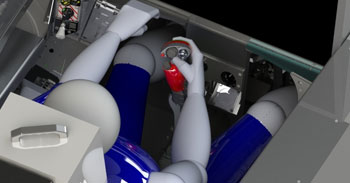
Typical procedure trainers are utilised for weapons load training, canopy/seat operation and removal, evacuation training and familiarisation.
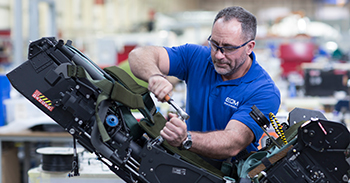
By closely understanding the functionality and operation of the real equipment, EDM ensure that procedure trainers are capable of delivering accurate training in strict accordance with the OEM's technical publications and the operating and maintenance procedures.
EDM has the capability to design and manufacture procedure trainers for any type of equipment ranging from aircraft operation and maintenance through to control room systems for power stations, process plants or submarines.
| Customer | BAE Systems |
| Location | UK, Germany, Italy, Spain |
| Contract date | 2000 |
| Program Duration | Initially 3 years and on-going |
| Scope of work | Design, development, manufacture, integration, test and support |
| Technical Scope | Full fidelity canopy and seat ejection system |
| Training Scope | Ground crew training |
| Installation & Commission | Transportation and installation |
| Support | Initial 5 years In-service support plan and on-going |
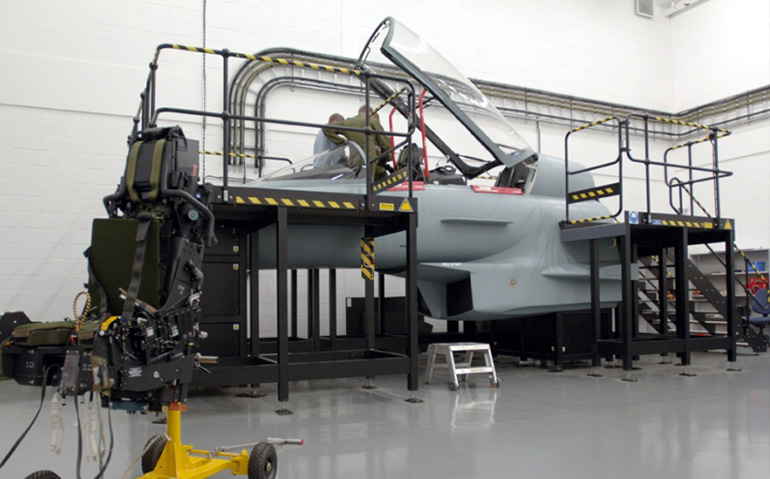
The CESST project involved the manufacture of four crew escape trainers to enable maintenance procedures training for Eurofighter Typhoon crew escape systems.
As the prime contractor EDM successfully delivered the four maintenance training systems to Eurofighter GmbH which consists of partner nations: UK, Spain, Italy and Germany. The device was designed and developed in parallel with the aircraft design and development program, and was delivered on time and on budget.
The trainer was designed for a full range of training activities such as canopy removal, seat removal and system checks in accordance with the aircraft technical publications. Full ILS documentation was provided, including R,M & T analysis, technical publications, operation and maintenance manuals, qualification and verification testing.
The lessons EDM learnt on this program and the innovative approach to solving problems, placed us in the position of being a low risk solution provider for these types of training devices.
This was a four Nation procurement program through a management organisation (NETMA). The technical specification was agreed by all four nations and any subsequent changes or amendments had to be ratified by all parties. All four nations are impressed with the technical fidelity and reliability of the solutions and EDM continues to support the devices in service.
| Customer | MOD- ASCENT – CAE – UK MFTS |
| Location | RAF Valley, UK |
| Contract date | 2008 |
| Program Duration | 20 months |
| Scope of work | Design, development, manufacture, install and commission |
| Technical Scope | Electrical, mechanical, systems and I/O |
| Training Scope | Full Mission Simulator |
| Installation & Commission | Integration of visuals, flight model and installation at RAF Valley |
| Support | Through life support |
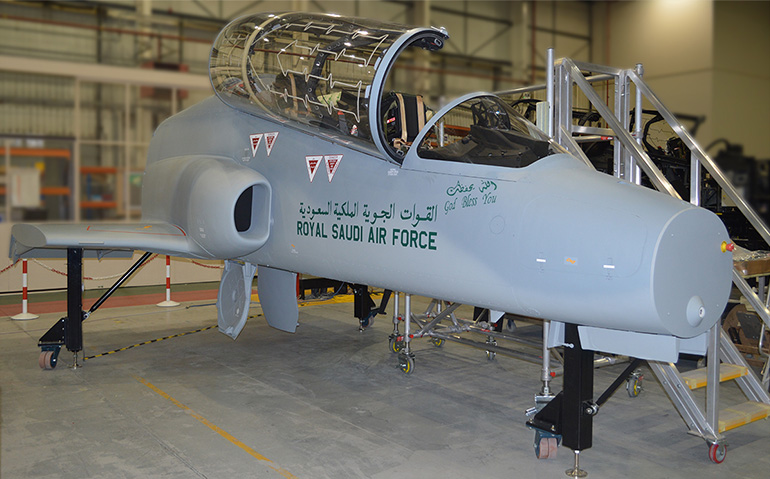
As part of the UK Military Flying Training System (MFTS) programme, the RAF required full mission simulators for the latest Hawk Mk.128 AJT.
EDM designed, developed and supplied the cockpit environment hardware and equipment for two Hawk Mk128 AJT full mission simulators developed by CAE for Lockheed Martin.
The full mission simulator is a high end training device which provides simulation of the Hawk Mk128 through the use of a three dimensional cockpit, computer equipment, simulation software and an audio system.
The cockpits were integrated with a full visual and flight model system during installation at the training facility based at RAF Valley in Anglesey, Wales.
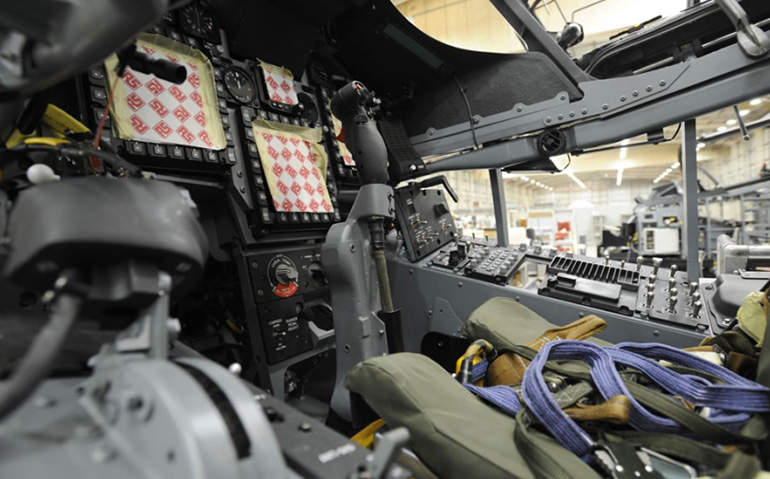
The cockpit environment trainer consists of a cockpit fuselage and canopy on a fixed base structure, cockpit console with primary flight controls (excluding load units), secondary flight controls (including load units) and associated electrical equipment.
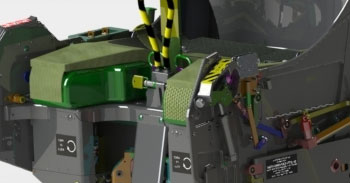
EDM also supplied a G-seat system within a replica Martin Baker Mk10LH seat to simulate the look and feel of the Mk.GB10 LH seat which is fitted in the Hawk Mk128. The EDM G-seat system simulates the effects of G-force within the flight simulator using a set of actuators to provide tactile cues to the trainee pilot. The G-seat also included a pressurised breathing air system.
| Customer | Army (BAE Systems) |
| Location | UK |
| Contract date | 2008 |
| Program Duration | 1 year |
| Scope of work | Design, development, manufacture, integration and test |
| Technical Scope | Mechanical structures, systems, control and integration |
| Training Scope | Overhead weapons system training |
| Installation & Commission | Transportation, installation and commissioning |
| Support | On-going |
The British Army’s command and liaison vehicle, known as the panther is fitted with a self defence weapon station combining a Surveillance Target Weapon Sight (STAWS) and an Enforcer Remote Controlled Weapons Station (RCWS).
The fault inducing Overhead Weapons System (OWS) part task trainer was specifically designed to enable full training of the system and the ability to run fault diagnosis training covering the operation of the OWS fire control system, the OWS gun control system and the OWS Commander’s sighting systems.
Its training scope also includes performing Level 1 maintenance and weapon handling drills using the OWS, demonstrating the bore sight on the OWS gun control system and functional testing.
The system combines a internal display and control system utilising the gun control unit, gun display unit and the gun control handle.
| Customer | BAE Systems |
| Location | Kinloss, Scotland |
| Contract date | 2003 |
| Program Duration | 10 months |
| Scope of work | Design, manufacture, install and commission |
| Technical Scope | Mechanical structures, systems, control and integration |
| Training Scope | Crew escape procedures training |
| Installation & Commission | Transport, assembly and commission |
| Support | 3 years in-service support |
The Nimrod MRA4 offers unrivalled operational effectiveness, incorporating an advanced technical, mission capability and a fully integrated training system.
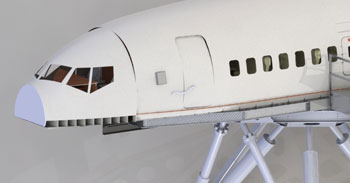
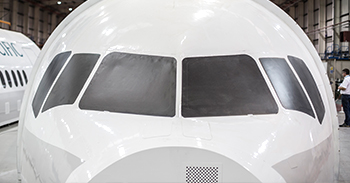
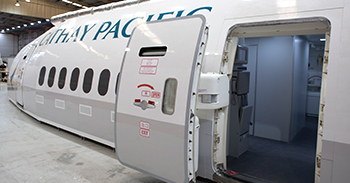
Working with a prime contractor on this project, EDM designed and built the evacuation trainer with a full length fuselage (95’ long by 6’6” diameter) and partial wings to enable realistic evacuation procedures to be implemented.
The interior is fully modeled to represent the equipment layout, the main and overwing escape door are replicated to function as the real aircraft. The features activated from the IOS (instructor operating station) include fire and smoke, communications and lighting, breathing air and smoke extraction.
The trainer is equipped for situational awareness as a fully integrated evacuation trainer for Flight Crew and Cabin Crew and includes fire and smoke training equipment.
It has a fully representative Flight Deck and the mission deck area includes a Radar workstation, an ESM workstation, an acoustic workstation and an ordnance workstation.
The scope of work also included the provision of operation and maintenance manuals.
If necessary the design of the trainer also allows it to be capable of being dismantled and moved to a different location.
| Customer | Blackpool & Fylde Survival College |
| Location | Blackpool, UK |
| Contract date | 2005 |
| Program Duration | 8 months |
| Scope of work | Design, development and manufacture |
| Technical Scope | All hardware and control firmware |
| Training Scope | Aircrew evacuation and ditching |
| Installation & Commission | Transportation and installation |
| Support | Service support contract on-going |
The HUET has been designed, manufactured and certified to meet OPIT requirements (approved by International Association for Safety and Survival Training - IASST).
It is an integral tool in assisting the saving of lives, by providing a platform to develop skills for overcoming disorientation associated with underwater escape, for members of emergency service, helicopter crews, military personnel, search and rescue teams and oil platform workers.

The EDM Helicopter Underwater Escape Trainer has been specifically designed to carry between two and twelve personnel and is certified for training students on the methods of underwater escape from rotary and fixed wing aircraft. The HUET provides an understanding of the dangers that can be encountered when faced with a water ditching.
Doors and window can be interchanged to represent various types of aircraft, with interiors being moveable to provide the correct physical layout for the training requirements. These include multiple seat arrangements and Medivac layouts.
| Customer | Lockheed Martin |
| Location | USA |
| Contract date | 2007 |
| Program Duration | 4 years and on going |
| Scope of work | Design, development, manufacture, integration and test |
| Technical Scope | Mechanical structures, systems, control and integration |
| Training Scope | Air crew and ground crew training |
| Installation & Commission | Transportation, installation and commissioning |
| Support | Through life support |
In 2007 EDM secured a prestigious contract for the world’s largest defence programme to design, develop and deliver Lockheed Martin with hardware based training devices.
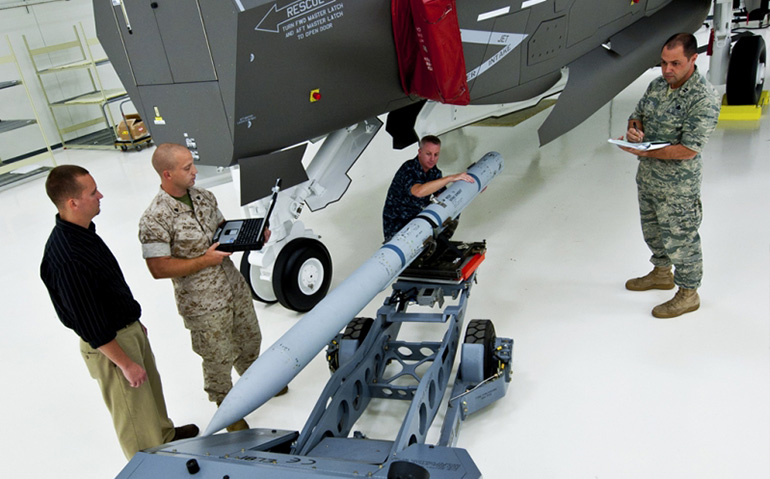
Despite the competition, Lockheed Martin initially contracted EDM under LRIP 2; to supply the ground based training devices that are part of the wider JSF training system programme. Within this project EDM are responsible for the Ejection System Maintenance Trainer (ESMT) and the Weapons Loading Trainer (WLT).
The unique design and development of the F-35 training devices are that they will simulate all three JSF variants CTOL, STOVL, and CV.
The WLT is a high fidelity procedural training device that will be used to train armourers in the correct procedures for loading weapons, support and release equipment and alternate mission equipment. The high fidelity representation of the fuselage weapons bays will provide realistic hands-on practical training of the loading, configuration and unloading of aircraft.
Two WLTS's have been successfully delivered to Eglin Airforce Base. An extension to the contract to provide a third WLT means that EDM continue to support the F35 Lighting II training system programme.
Visit EDM at Team JSF http://www.jsf.org.uk/JSF-UK-Industry-Team/JSF-UK-Industry-Team.aspx