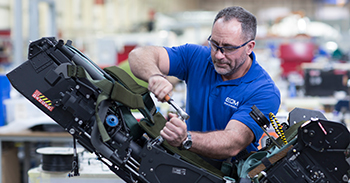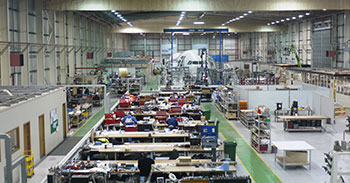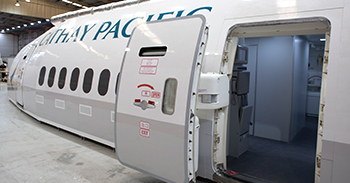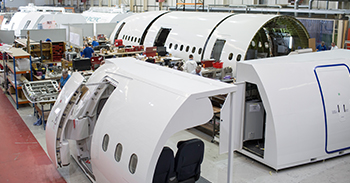
Maintenance trainers are a cost efficient and safe method to provide realistic training without the need to take real equipment out of service.

Using integrated solutions, EDM are able to accurately simulate training scenarios, preparing trainees for all eventualities, encouraging problem solving and ultimately improving their vital performance. As the maintenance trainer is a faithful representation, it can effectively be used to train personnel on fault diagnosis and rectification.

In certain scenarios, faults can be introduced into the training device that would be difficult or detrimental to demonstrate on the real equipment. This adds real value as the trainee can prepare for situations that they may not otherwise encounter until they are in a live situation. For safety critical situations this prior knowledge and experience of procedures is vital and invaluable.

EDM has the specialist skills, knowledge and capabilities to design and build highly realistic training devices to suit the level of training required.

Downloads

Titan and Trojan Electrical/Electronic Diagnostic Trainer

Customer Army (VEGA)
Location Borden, UK
Contract date 2005
Program Duration 2 years
Scope of work Design, development, manufacture, integration and test
Technical Scope Mechanical structures, systems control and integration
Training Scope Electrical/electronics maintenance trainer
Installation & Commission Transportation, installation and commissioning
Support 5 years support plan

Project Profile

Based on the Challenger 2, the Trojan tank is a unique complex obstacle-crossing vehicle whilst the Titan is the fastest tank bridge layer in the world.

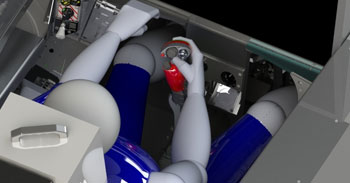
The design of the Electrical/electronic Diagnostic Trainer (EDT) combines the exact fidelity of the tank interior environment and instruments with the practicalities associated with the demands of the training process.

Trainees can interrogate any set of electrical pins on the trainer to detect, diagnose and repair faults.
Instructors can simulate errors in any of the electrical/electronic systems on board and monitor and evaluate the trainee’s response in real time. All faults are fully representative of the type of fault that could be encountered in the real environment.

The design principals of the EDT can be applied readily to numerous other types of military vehicle.

Mk T 16LF Ejection Seat and Maintenance Trainer

Customer Havalsan
Location Turkey
Contract date 2010
Program Duration 18 months
Scope of work 1 maintenance training seat/ 8 simulated seats
Technical Scope Mechanical structures, systems, control and integration
Training Scope Air crew and ground crew training
Installation & Commission Transportation and installation

Project Profile

The facsimile training seats are fully engineered high fidelity replicas of the Martin Baker Mk T-16LF ejection seat for the Turkish Airforce KT-1T aircraft.

EDM were contracted by Havalsan to design and manufacture eight replica simulated ejection seats utilising original ejection seat data under licence from Martin Baker, to be installed into a fixed base simulator.

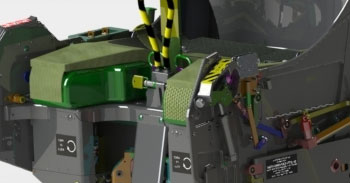
The seats are dimensionally representative of the actual ejection seat and are designed to withstand the rigours of daily use including cockpit entry, strap-in/out and cockpit egress. And also include handles and switches such as ejection handle, safe-armed handle, manual separation handle, survival kit deployment switch, leg restraint release lever and the emergency oxygen handle.

The seats are equipped with a simulated shoulder harness power retraction unit (HPRU), a representative personal survival pack (PSP) and a representative seat oxygen bottle.

The customer provided the harness and leg restraints which were modified to interface with the simulated seat without detriment to the training fidelity.

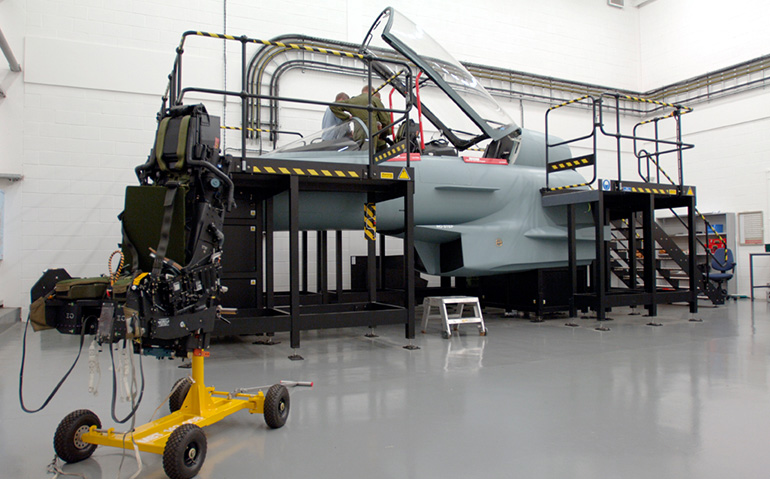
In addition the project included the design and manufacture of a replica simulated ejection seat for maintenance personnel training. The maintenance seat is similar to the simulator seats but has additional functionality appropriate to performing maintenance training tasks.

Joint Strike Fighter F35 Lightning II

Customer Lockheed Martin
Location USA
Contract date 2007
Program Duration 4 years and ongoing
Scope of work Design, development, manufacture, integration and test
Technical Scope Mechanical structures, systems, control and integration
Training Scope Ground crew training
Installation & Commission Transportation, installation and commissioning
Support Through life support

Project Profile

In 2007 EDM secured a prestigious contract for the world’s largest defence programme to design, develop and deliver Lockheed Martin with hardware based training devices.

Despite the competition, Lockheed Martin initially contracted EDM under LRIP 2; to supply the ground based training devices that are part of the wider JSF training system programme. Within this project EDM are responsible for the Ejection System Maintenance Trainer (ESMT) and the Weapons Loading Trainer (WLT).

The unique design and development of the F-35 training devices are that they will simulate all three JSF variants CTOL, STOVL, and CV.

The ESMT is used to teach students the necessary skills required to maintain the F-35 ejection seat and canopy jettison systems, and allows for the provision of pilot ingress/egress training.

The ESMT was successfully delivered to Eglin Airforce Base in March 2011, whilst work on the WLT continues.

Visit EDM at Team JSF http://www.jsf.org.uk/JSF-UK-Industry-Team/JSF-UK-Industry-Team.aspx

Advanced Propulsion Systems Trainer (APST)

Customer MOD
Location RAF Cosford, UK
Contract date 1998
Program Duration 2 years
Scope of work Design, development, manufacture, integration and test
Technical Scope Fuselage structure, electronics, PLC control, I/O and electrical system
Training Scope Technician practical training and diagnosis
Installation & Commission Transportation and installation
Support 5 year In-service support plan

Project Profile

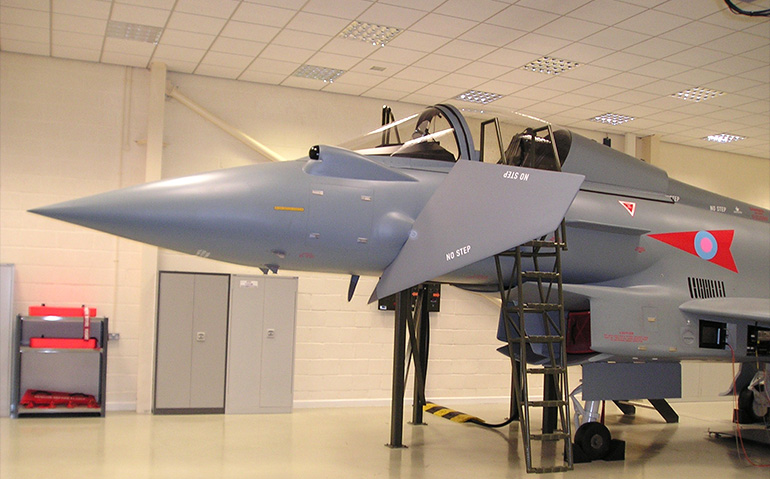
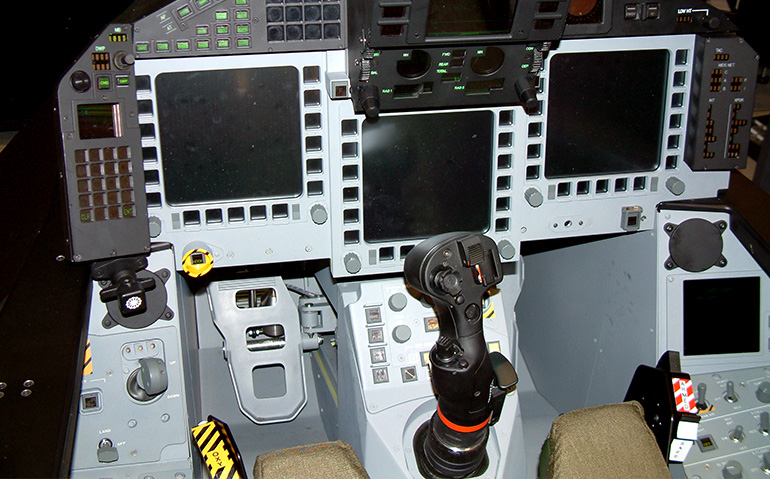
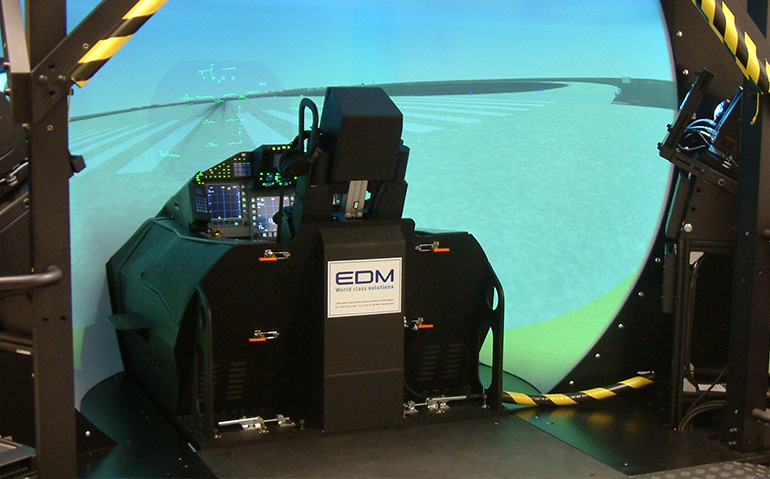
The APST was designed for propulsion system simulation for maintenance Training and is a full size facsimile aircraft that combines aircraft systems from the Tornado and Eurofighter Typhoon and provides a fully simulated cockpit environment for full engine run procedures.

Its capabilities for practical training include engine component adjustment and simulated test set facilities. The APST is used continuously in all aspects of aircraft maintenance training procedures and has instructor workstation facilities, session monitoring and fault induction.

The simulator can be used to train scenarios such as engine surge which cannot be trained safely onboard an aircraft.

Eurofighter Typhoon Weapons Demonstrator

Customer BAE Systems
Location UK
Contract date 2000
Program Duration 12 months
Scope of work Design, manufacture and installation and commission
Technical Scope Mechanical structures, weapons systems, control, design and integration
Training Scope Weapons fit demonstrator
Installation & Commission Transportable device
Support Return to base repair and upgrade

Project Profile

The two full size replica jets for BAE Systems were designed and manufactured to demonstrate the current and future weapons fit for the Eurofighter Typhoon, which was new at the time.

The Weapons Demonstrator cockpit was fully detailed and included simulated weapons and pylons as a replica in fit and form of the real equipment. The weapon facsimiles are detailed to ensure total realism with the capability to provide software interrogation of stores and the maintenance data panel can be modified to suit the customer’s requirement.



  • EDM Simulation Clients
  • EDM Simulation Clients
  • EDM Simulation Clients